Resources

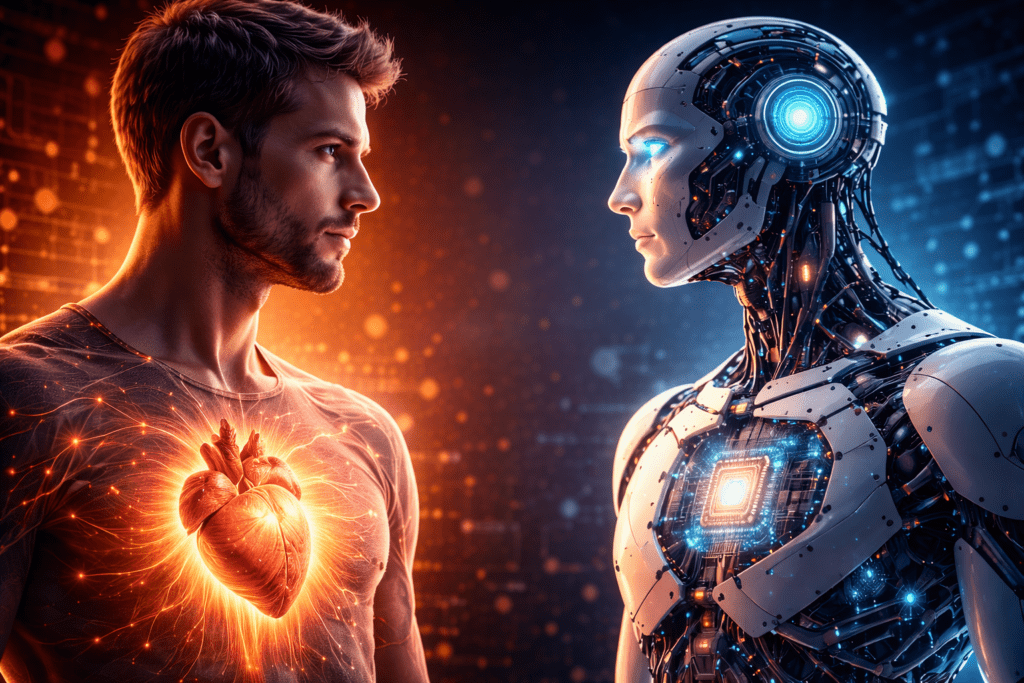
Human with a visible glowing heart facing a humanoid robot with a microchip in its chest, standing face to face to symbolise the difference between human consciousness and artificial intelligence.

How AI Really Works — And Why It Is Not Like the Human Brain

Artificial intelligence is often described as if it were thinking, feeling, or understanding like a human being.

In reality, this is misleading. AI is not a mind, not a consciousness, and not a digital brain.

It is a large statistical system designed to recognise patterns and predict outcomes. Understanding this difference is essential if we want to use AI wisely.

Read more

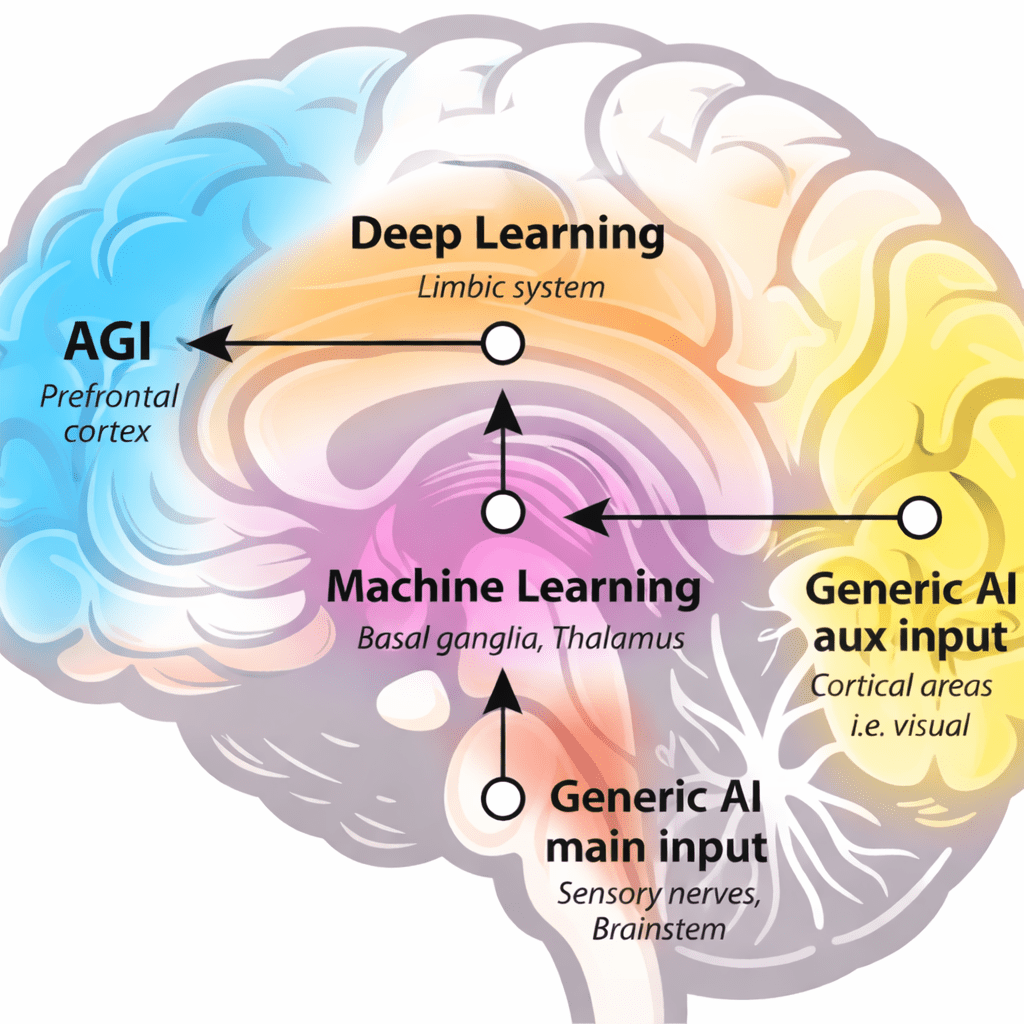
Diagram showing how different AI approaches map metaphorically to human brain regions, illustrating the cognitive impact of AI use on learning and thinking.

Using AI and Not Becoming an Idiot

Artificial intelligence is often praised for efficiency and speed, yet its impact on how we learn, think, and internalise knowledge is rarely examined.

This article explores how systematic reliance on AI can bypass essential cognitive processes, turning assistance into substitution and output into unearned competence.

Beyond productivity gains, the real question becomes whether we are optimising for short-term performance — or preserving the effort that makes intelligence durable.

Read more

Professional woman interacting with a humanoid AI agent in a futuristic office, illustrating future jobs and human-AI collaboration in 2030.

AI Agents and the Future of Work

As artificial intelligence moves from automation to autonomy reshaping decision-making,
execution, and knowledge work, professional roles are being fundamentally redefined.

This reflection explores how AI agents are transforming cognitive labour,
compressing time, accelerating analysis, and shifting value away from information
production toward judgment, ethics, and human context.

As we approach 2030, the challenge is no longer whether AI will work —
but how humans can reposition themselves within hybrid human–AI systems
and preserve meaning, responsibility, and agency at work.

Read more
Group of business professionals, men and women, running after a clock that symbolises time pressure at work and the acceleration of modern life.

Beyond Speed: Re-centring Humans in Learning and Organisations

In a world where everything is accelerating — technology, workload, and expectations —
training and learning spaces risk becoming fragmented. This article explores how the
digital age has compressed human time, reducing our capacity for reflection and authentic
connection. Drawing on experiences from European institutions, it calls for a collective shift:
to re-centre learning around the human being, rebuild balance, and restore meaning at work.


Read more

Illustration showing professionals connected online during remote work and soft-skills training in the digital age.


Evolution of Remote Work and Soft Skills Training in the Digital Age

Based on my experience delivering soft-skills training and coaching within a major international organisation in Europe,
this article explores how learning formats have evolved from full in-person sessions before COVID-19,
to fully remote modules during the pandemic, and now to a balanced hybrid model.
It highlights how these changes—initially shaped by necessity—reflect a wider global shift
combining flexibility, digital collaboration, and human connection.


Read more

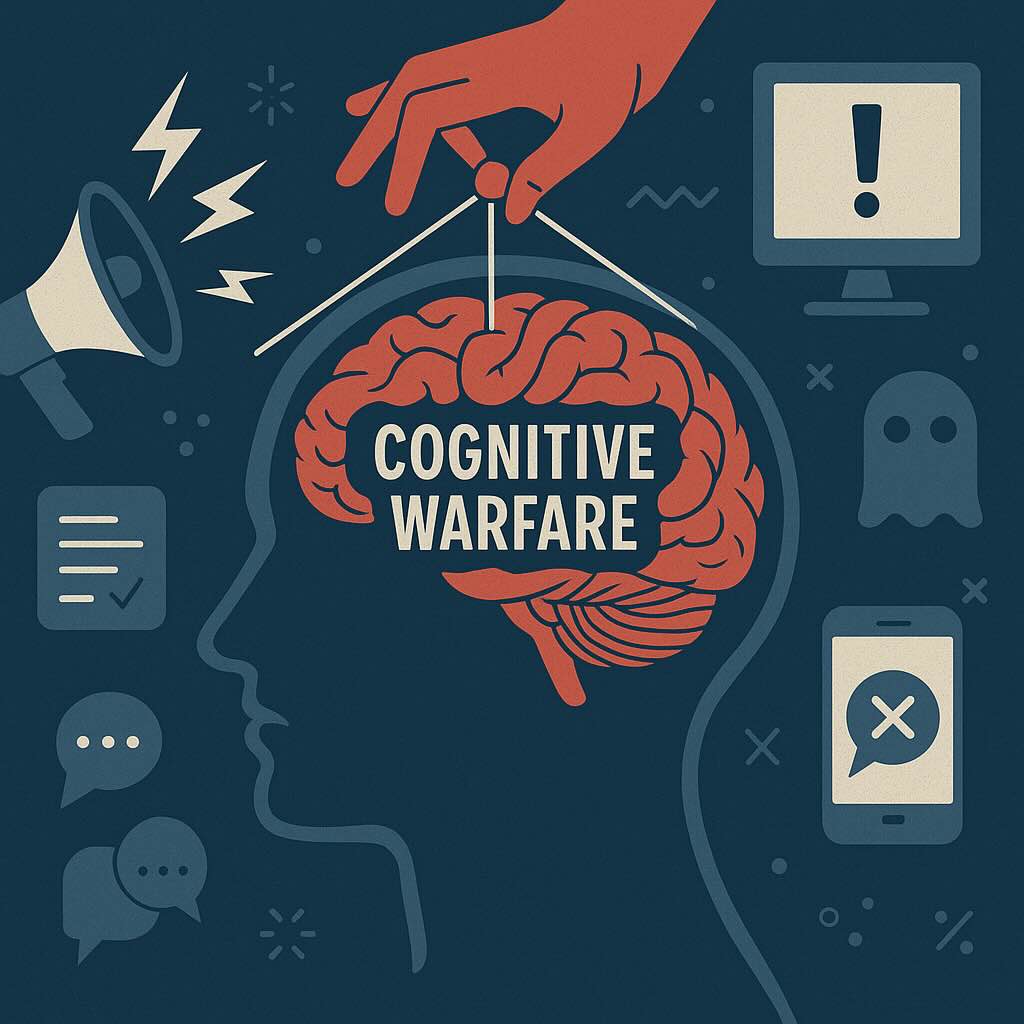
Illustration of a human head with a brain controlled like a puppet, symbolising cognitive warfare, manipulation, and digital disinformation.